
How marketing budgets are being redeployed
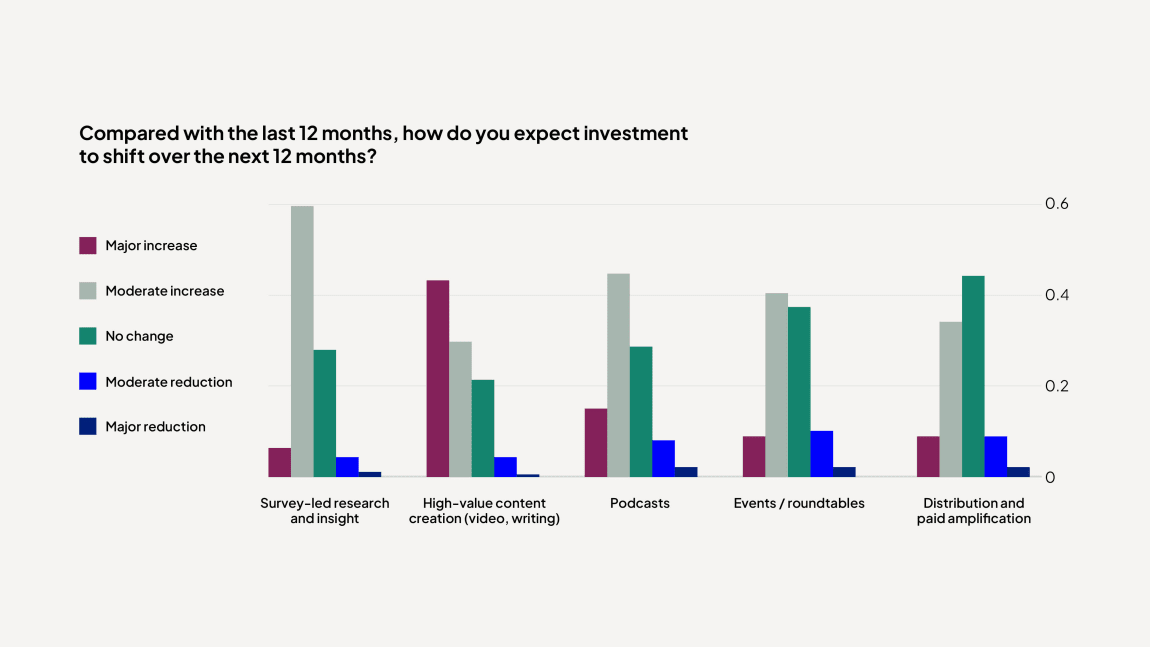
Many marketing leaders are under real pressure to demonstrate cost savings from AI. And the data suggests many are using that efficiency to make more deliberate choices about where they invest. Rather than simply producing more, organisations are shifting resources towards quality and substance.
Nearly three-quarters of organisations are increasing investment in high-value content creation, including video and writing. Investment in original research and insight is also rising.
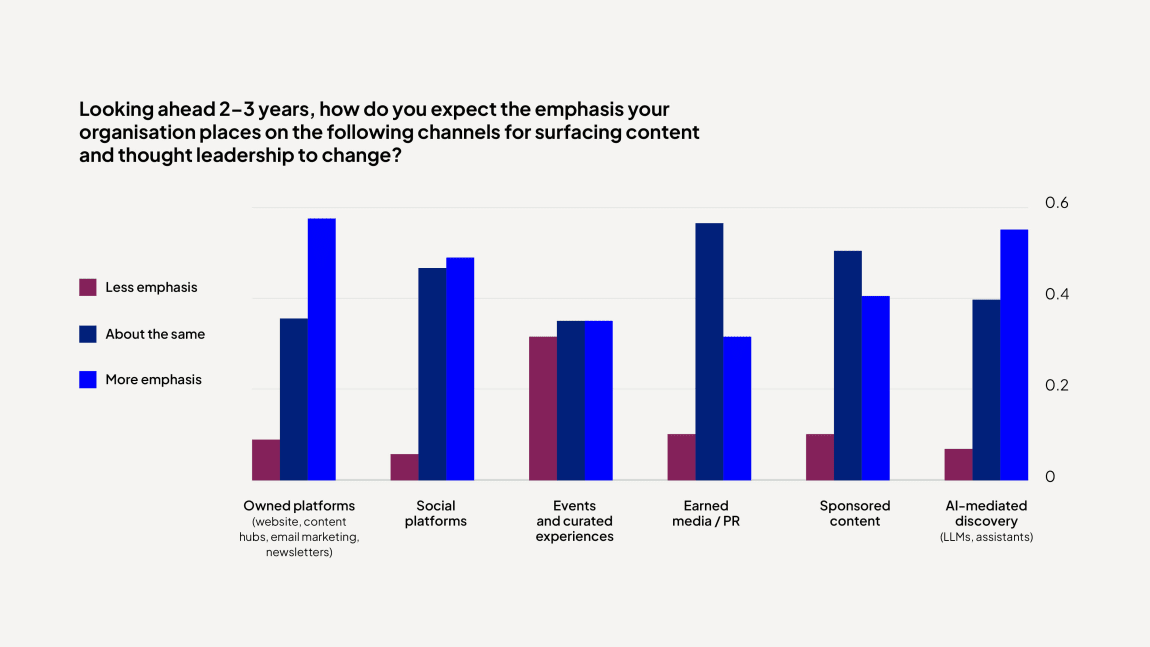
At the same time, emphasis is moving towards owned platforms, such as websites, content hubs and newsletters, where brands can control the narrative and build direct relationships with audiences. Over the next two to three years, 56% of leaders expect to prioritise these channels. They demand a steady flow of quality content to build authority with audiences, and increasingly to signal relevance to large language models (LLMs).
Satwant WishartPandher Wishart StudiosThis shift is reflected in the work we are being asked to do. Marketing leaders are transforming insight pages into knowledge hubs, commissioning original research and bringing it to life across video, articles and interactive formats.
They are building an editorial cadence that signals authority consistently over time, to both human audiences and AI systems.

Why long-form is back
The rise of podcasts is worth noting, though we suspect much of this is being driven by the growth of the vodcast, long-form video published to platforms like YouTube. There is a growing understanding that content over 20 minutes carries more weight with large language models when surfacing recommendations. Depth matters for both humans and machines, but human audiences also need creative hooks, strong storytelling and reasons to keep watching. An approach that earns attention from people first will be rewarded with visibility from machines as a result.
AI, trust and discoverability
One of the most notable changes since last year's study is the speed at which AI visibility has moved up the agenda.
Twelve months ago, very few organisations were actively thinking about how LLMs might influence content discovery. Today, it is one of the most common questions we hear from clients.
Search is changing. Buyers and decision-makers are increasingly using AI assistants, answer engines and LLMs to help them find, compare and shortlist ideas, experts and suppliers.
This raises a new challenge for marketing teams: how do you ensure your expertise is discoverable not only by people, but by machines?
Most organisations are still at an early stage. More than half of respondents say they are actively testing approaches to LLM visibility, while more than a third are aware of the issue but have yet to develop a clear strategy.
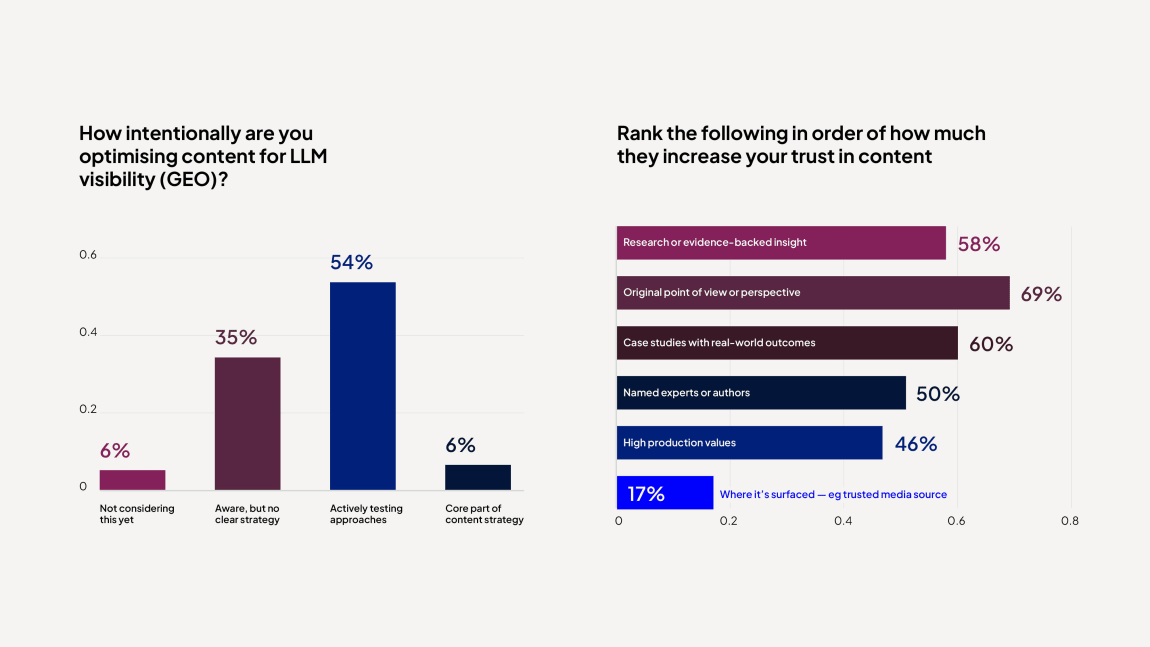
Encouragingly, the qualities that appear to improve visibility in AI-driven recommendations are the same ones that build trust.
When asked what increases trust and credibility, respondents pointed to original perspectives, properly sourced research, real-world case studies and named experts or authors.
These are also the signals that help AI systems determine what is worth surfacing and recommending.
For marketing leaders, this should be reassuring. The rise of AI search does not require an entirely new content playbook. It reinforces the importance of the one that has always worked.
Read next